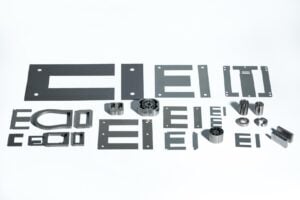
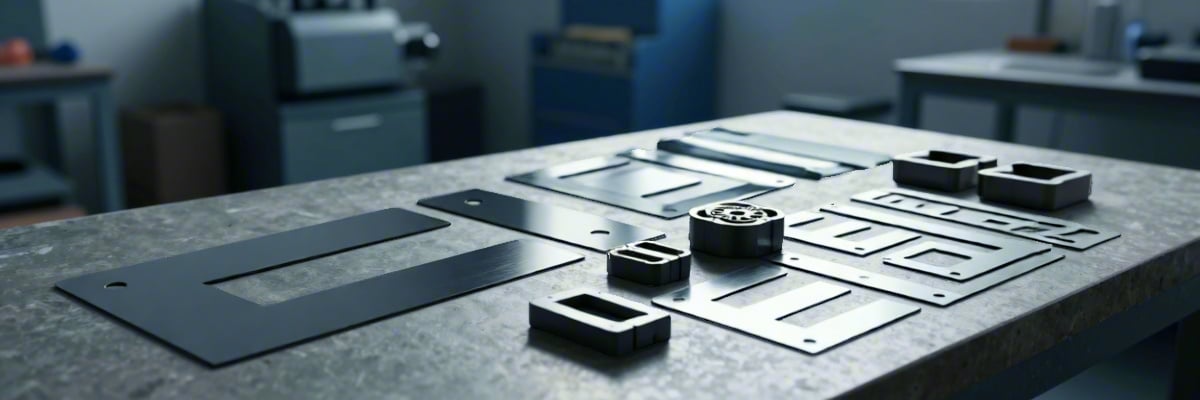
For engineers, purchasing managers, and OEM sourcing teams, transformer core performance is not determined by material grade alone. The way silicon steel laminations are processed after stamping can also affect magnetic stability, core loss, noise, heat rise, and long-term reliability. One of the most important processes is annealing transformer cores.
Annealing is a controlled heat treatment process used to reduce internal stress in silicon steel laminations. During stamping, cutting, punching, or shearing, the material can experience mechanical stress and edge deformation. These changes may affect magnetic properties. When properly applied, annealing helps restore magnetic performance, improve consistency, and support more stable transformer operation.
For buyers sourcing EI Lamination, UI Lamination, Three-Phase EI Lamination, Annealing Lamination, or Custom Made Silicon Steel Laminations, understanding the role of annealing can help you make better decisions before sending an RFQ.
¿Qué es el recocido en la fabricación de núcleos de transformadores?
Annealing is a heat treatment process that exposes silicon steel laminations or laminated cores to controlled temperature conditions. The purpose is to relieve mechanical stress, improve magnetic properties, and support stable performance in the final transformer core.
During lamination production, silicon steel sheets go through several processes, including slitting, cutting, stamping, punching, stacking, and sometimes riveting or welding. These mechanical processes may create stress inside the material. Even when the lamination dimensions are accurate, internal stress can still reduce magnetic performance.
Annealing helps reduce these stress effects. In transformer core manufacturing, annealing may be used for:
- Laminaciones EI
- UI laminations
- Gapped EI cores
- Three-phase EI cores
- Reactor cores
- Inductor cores
- Ballast cores
- Custom silicon steel cores
The annealing requirement depends on the application, material grade, lamination shape, thickness, processing method, and target performance.
Why Annealing Matters for Transformer Cores
Transformer cores are designed to guide magnetic flux efficiently. If the magnetic path is unstable or the material has high internal stress, the transformer may experience higher loss, higher temperature rise, more noise, or inconsistent performance.
Annealing can help improve transformer core performance in several ways:
| Performance Area | How Annealing Helps |
|---|---|
| Pérdida de núcleo | Helps reduce stress-related magnetic loss |
| Magnetic stability | Improves consistency in magnetic behavior |
| Noise control | Supports more stable magnetic performance |
| Heat rise | Lower loss may help reduce operating temperature |
| Batch consistency | Improves repeatability in mass production |
| Long-term reliability | Reduces risk caused by unstable core performance |
For OEM buyers, annealing is especially important when the application requires lower core loss, better magnetic consistency, or improved noise performance.
How Stamping Stress Affects Silicon Steel Laminations
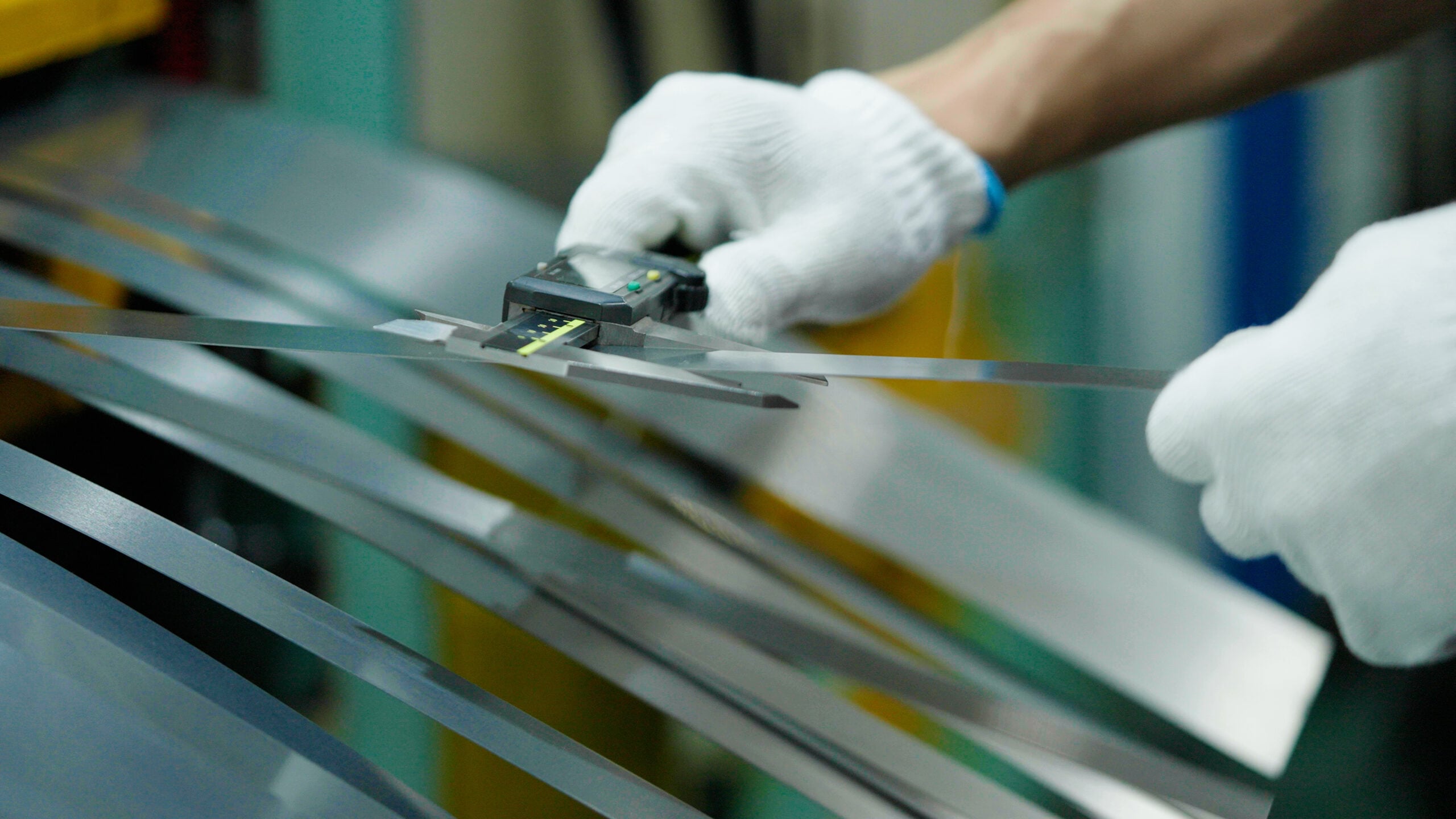
Silicon steel is widely used for transformer cores because it provides good magnetic performance. However, during manufacturing, the material is mechanically processed into specific shapes. Stamping, punching, and cutting can introduce stress into the material structure.
This stress may appear around:
- Outer edges
- Inner windows
- Slots
- Holes
- Corners
- Narrow sections
- Air gap areas
- Cut lines
Even if the lamination looks clean, stress may still exist inside the material. This can affect the way magnetic flux moves through the core.
For transformer applications, stress-related problems may include:
- Increased core loss
- Higher no-load loss
- Higher heat generation
- Less stable magnetic permeability
- Increased noise
- Batch-to-batch performance variation
That is why annealing is often considered when performance stability matters.
How Annealing Helps Reduce Core Loss
Core loss is one of the most important performance indicators in transformer design. It includes hysteresis loss and eddy current loss. While material grade, lamination thickness, insulation coating, and design all affect core loss, processing stress can also contribute to higher loss.
When silicon steel laminations are stamped or cut, the magnetic properties near the processed edges may change. If the stress is not controlled, the final laminated core may show higher loss than expected.
Annealing helps reduce stress and improve magnetic properties. For buyers, this means annealed transformer cores may support:
- Lower core loss
- Better no-load performance
- Mejora de la eficiencia energética
- More stable test results
- Better long-term operating consistency
Annealing does not automatically solve every core loss issue. Material selection, lamination thickness, burr control, stacking quality, and core design are also important. However, for applications where performance matters, annealing can be an important part of the manufacturing process.
How Annealing Helps Reduce Transformer Noise
Transformer noise is caused by several factors, including magnetic flux density, material behavior, core assembly, lamination fit, vibration, and magnetostriction. Poor core processing or unstable magnetic properties may make noise problems worse.
Annealing can help improve magnetic stability, which may support lower and more consistent operating noise. This is especially valuable for transformers used in:
- Power supplies
- Industrial control equipment
- Electrical appliances
- Lighting systems
- Reactors
- Inductors
- Precision electronic equipment
For low-noise applications, buyers should not rely on annealing alone. They should also check lamination burr control, stacking quality, air gap consistency, material grade, and assembly method.
A well-controlled annealing process, combined with accurate stamping and stable stacking, can help reduce noise risk and improve product consistency.
Key Parameters Buyers Should Check
When sourcing annealed transformer cores or annealed silicon steel laminations, buyers should review both material and process requirements.
| Parameter | What to Check | Why It Matters |
|---|---|---|
| Material Grade | Silicon steel / electrical steel grade | Affects magnetic performance |
| Thickness | 0.23mm, 0.27mm, 0.30mm, 0.35mm, 0.50mm or custom | Influences core loss and manufacturing cost |
| Core Type | EI, UI, three-phase EI, gapped core, custom core | Determines magnetic structure |
| Annealing Requirement | Required or not required | Affects magnetic stability |
| Temperature Control | Process stability | Impacts final magnetic performance |
| Burr Height | Edge quality after stamping | Affects stacking and loss |
| Stacking Height | Finished core dimension | Affects electrical performance |
| Testing Requirement | Core loss, permeability, dimensional inspection | Confirms quality consistency |
| Packing | Export-ready protection | Prevents deformation during shipment |
For RFQ preparation, buyers should provide drawings, material grade, lamination thickness, quantity, stacking method, annealing requirement, and target performance such as core loss, noise, inductance, or heat rise.
Which Transformer Cores May Need Annealing?
Not every transformer core requires annealing. The need depends on application requirements, performance targets, and manufacturing process.
Annealing may be useful for:
1. Low-Loss Transformer Cores
When a transformer needs better efficiency, lower no-load loss, or improved magnetic stability, annealing may be specified as part of the production process.
2. Precision EI Laminations
For EI Lamination used in power supplies, appliances, and industrial electrical products, annealing may help improve consistency after stamping.
3. UI Laminations
UI Lamination may be used in transformers and reactors where magnetic performance and assembly stability are important. Annealing can be considered if the project requires improved performance consistency.
4. Gapped EI Cores
EI Lamination with Air Gap is commonly used in inductors, reactors, and special transformers. Since gap consistency and magnetic behavior are important, annealing may be considered based on the final performance target.
5. Three-Phase EI Cores
Three-phase EI cores are used in larger or more complex transformer applications. Annealing may help improve batch stability when core loss and operating noise are important.
6. Custom Silicon Steel Cores
For drawing-based OEM projects, annealing may be recommended if the lamination shape is complex, the stamping area is large, or the buyer has strict performance requirements.
Annealing and Burr Control: Why Both Matter
Annealing improves magnetic properties by reducing stress, but it does not replace burr control. These two quality factors solve different problems.
Burr control focuses on the physical edge quality of the lamination. Annealing focuses on stress relief and magnetic performance improvement.
| Quality Factor | Main Purpose | Performance Impact |
|---|---|---|
| Control de rebabas | Controls edge quality after stamping | Affects stacking, insulation, and loss |
| Recocido | Reduces internal stress | Affects magnetic stability and core loss |
| Material Selection | Determines magnetic potential | Affects efficiency and performance |
| Stacking Quality | Controls final core structure | Affects noise, vibration, and fit |
| Testing | Confirms actual results | Reduces batch quality risk |
For high-quality transformer cores, buyers should consider the full manufacturing process instead of focusing on only one parameter.
Manufacturing Process for Annealed Transformer Cores
A typical production flow for annealed transformer laminations may include:
- Material inspection
Silicon steel material is checked for grade, thickness, surface condition, and traceability. - Slitting or cutting
Material is prepared to the required width or sheet size. - Precision stamping
EI, UI, or custom lamination shapes are produced according to tooling or customer drawings. - Dimensional inspection
Key dimensions such as window size, width, length, slot position, and profile accuracy are checked. - Burr inspection
Edge quality is reviewed to reduce stacking and insulation risks. - Annealing process
Laminations or cores are heat treated under controlled conditions to relieve stress and improve magnetic stability. - Performance testing
Depending on project requirements, core loss, magnetic performance, and dimensional consistency may be inspected. - Packing and shipment
Products are packed for export to reduce deformation, moisture exposure, and transportation damage.
For OEM projects, the exact process may vary depending on material grade, lamination thickness, product structure, and customer requirements.
How to Specify Annealing in an RFQ
If your project requires annealed silicon steel laminations or annealed transformer cores, it is important to make the requirement clear during the RFQ stage.
Recommended RFQ information:
| RFQ Item | Example Information |
|---|---|
| Drawing | PDF, DWG, CAD, or physical sample |
| Product Type | EI lamination, UI lamination, gapped core, custom core |
| Material Grade | Silicon steel grade or equivalent |
| Thickness | 0.23mm, 0.27mm, 0.30mm, 0.35mm, 0.50mm or custom |
| Recocido | Required / not required / supplier recommendation |
| Stack Height | Finished core stack dimension |
| Quantity | Samples, trial order, or annual demand |
| Stacking Method | Loose stacking, riveting, welding, or custom |
| Performance Target | Core loss, noise, heat rise, inductance |
| Testing Requirement | Dimensional inspection, magnetic testing, core loss test |
| Packing | Carton, pallet, anti-rust, moisture protection |
If buyers are not sure whether annealing is required, they can provide application details and target performance. The supplier can review the design and suggest whether annealing should be included.
How to Choose an Annealed Lamination Supplier
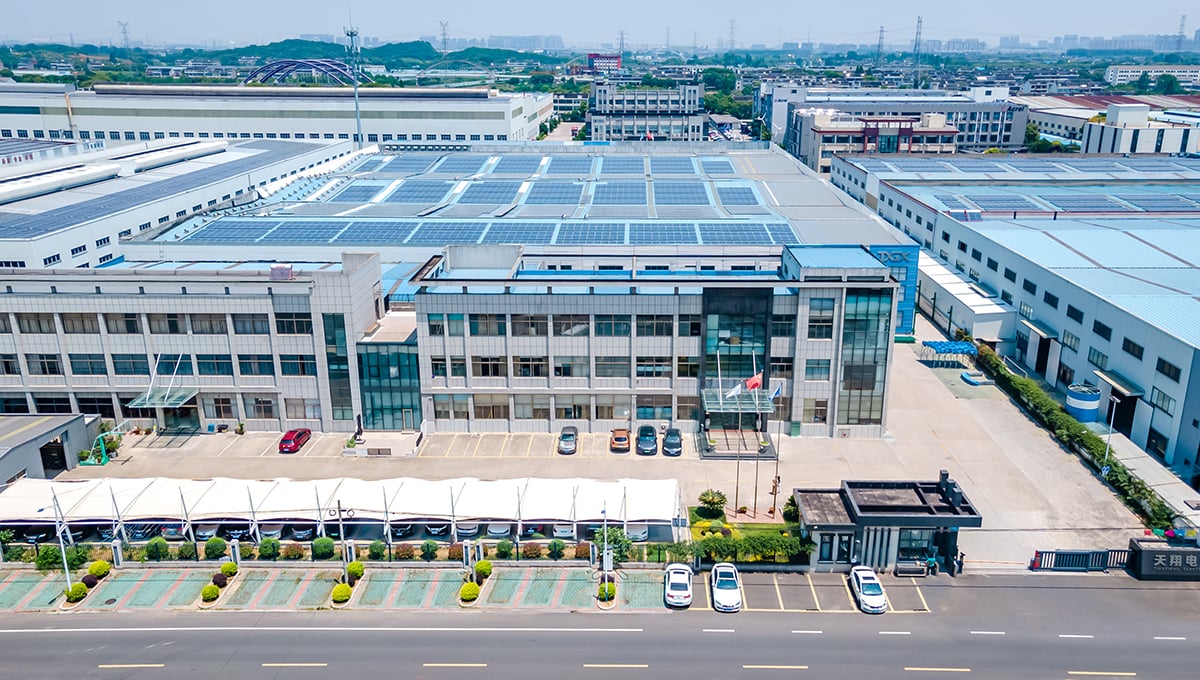
Choosing the right supplier is important for transformer core performance. A supplier should not only provide stamped parts, but also understand how material, burr control, annealing, stacking, and testing affect the final product.
Important supplier capabilities include:
- Experience with silicon steel laminations
- Drawing-based OEM production
- Precision stamping capability
- Burr control process
- Annealing equipment and process control
- Material traceability
- Dimensional inspection
- Electromagnetic performance testing
- Export-ready packaging
- Engineering communication
- Stable mass production ability
For B2B buyers, the goal is to reduce production risk. A supplier with both manufacturing capability and technical understanding can help support sampling, testing, mass production, and long-term supply.
Common Mistakes Buyers Should Avoid
When sourcing annealed transformer cores, buyers should avoid several common mistakes.
1. Only Comparing Unit Price
A cheaper lamination may lead to higher core loss, assembly rework, noise issues, or inconsistent test results. The total cost should include performance and production risk.
2. Not Providing Drawings
Without drawings, it is difficult for the supplier to confirm dimensions, tolerances, stack height, material usage, and tooling requirements.
3. Ignoring Burr Requirements
Annealing does not remove burrs. Burr control must be managed during stamping, cutting, and inspection.
4. Not Specifying Performance Targets
If core loss, noise, inductance, or heat rise requirements are important, they should be shared during RFQ.
5. Assuming All Annealing Is the Same
Annealing quality depends on process control. Temperature, time, furnace condition, loading method, and material type can affect final results.
Related Products
For transformer, reactor, inductor, motor, and power electronics applications, buyers may also review these product categories:
- Laminación EI
- EI Lamination with Air Gap
- UI Lamination
- Three-Phase EI Lamination
- Laminación por recocido
- Custom Made Silicon Steel Laminations
- Motor Core
- Remachado apilado
FAQ
1. What is annealing in transformer core manufacturing?
Annealing is a controlled heat treatment process used to reduce internal stress in silicon steel laminations. It helps improve magnetic stability, reduce stress-related core loss, and support more consistent transformer core performance.
2. Why do transformer laminations need annealing?
Transformer laminations may need annealing because stamping, cutting, and punching can introduce mechanical stress into silicon steel. Annealing helps relieve this stress and improve magnetic properties.
3. Does annealing reduce transformer core loss?
Annealing can help reduce stress-related magnetic loss and improve performance consistency. However, core loss is also affected by material grade, thickness, lamination insulation, burr control, stacking quality, and core design.
4. Can annealing reduce transformer noise?
Annealing may help support lower and more stable noise performance by improving magnetic stability. For low-noise designs, buyers should also consider material selection, stacking quality, burr control, and assembly method.
5. Is annealing required for all EI laminations?
No. Not all EI laminations require annealing. The need depends on application, material grade, performance target, and customer requirements. For low-loss or low-noise applications, annealing may be recommended.
6. Does annealing remove burrs?
No. Annealing does not remove burrs. Burr control must be handled during stamping, cutting, tooling maintenance, and inspection. Annealing mainly helps reduce internal stress and improve magnetic properties.
7. What information is needed for an annealed lamination quote?
Buyers should provide drawings, material grade, thickness, quantity, stacking method, annealing requirement, and target performance such as core loss, noise, heat rise, or inductance.
8. Can custom silicon steel laminations be annealed?
Yes. Custom silicon steel laminations can be annealed when the project requires improved magnetic stability or lower stress-related loss. The requirement should be reviewed based on the drawing, material, thickness, and final application.

Annealing transformer cores is an important process for improving magnetic stability, reducing stress-related core loss, and supporting more consistent transformer performance. For applications where core loss, noise, heat rise, and long-term reliability matter, annealing should be considered during the early sourcing and design stage.
For buyers, the key is to evaluate the full manufacturing process, including material grade, lamination thickness, stamping accuracy, burr control, annealing, stacking method, testing, and packaging. A reliable supplier should be able to support technical review, sampling, quality control, and mass production.
Tianxiang provides EI Lamination, UI Lamination, Three-Phase EI Lamination, Annealing Lamination, Motor Core, and Custom Made Silicon Steel Laminations for global OEM customers.
Need annealed transformer cores or custom silicon steel laminations? Send us your drawing, material grade, thickness, quantity, stacking method, annealing requirement, and target performance. Our team will review your project and provide a quotation.