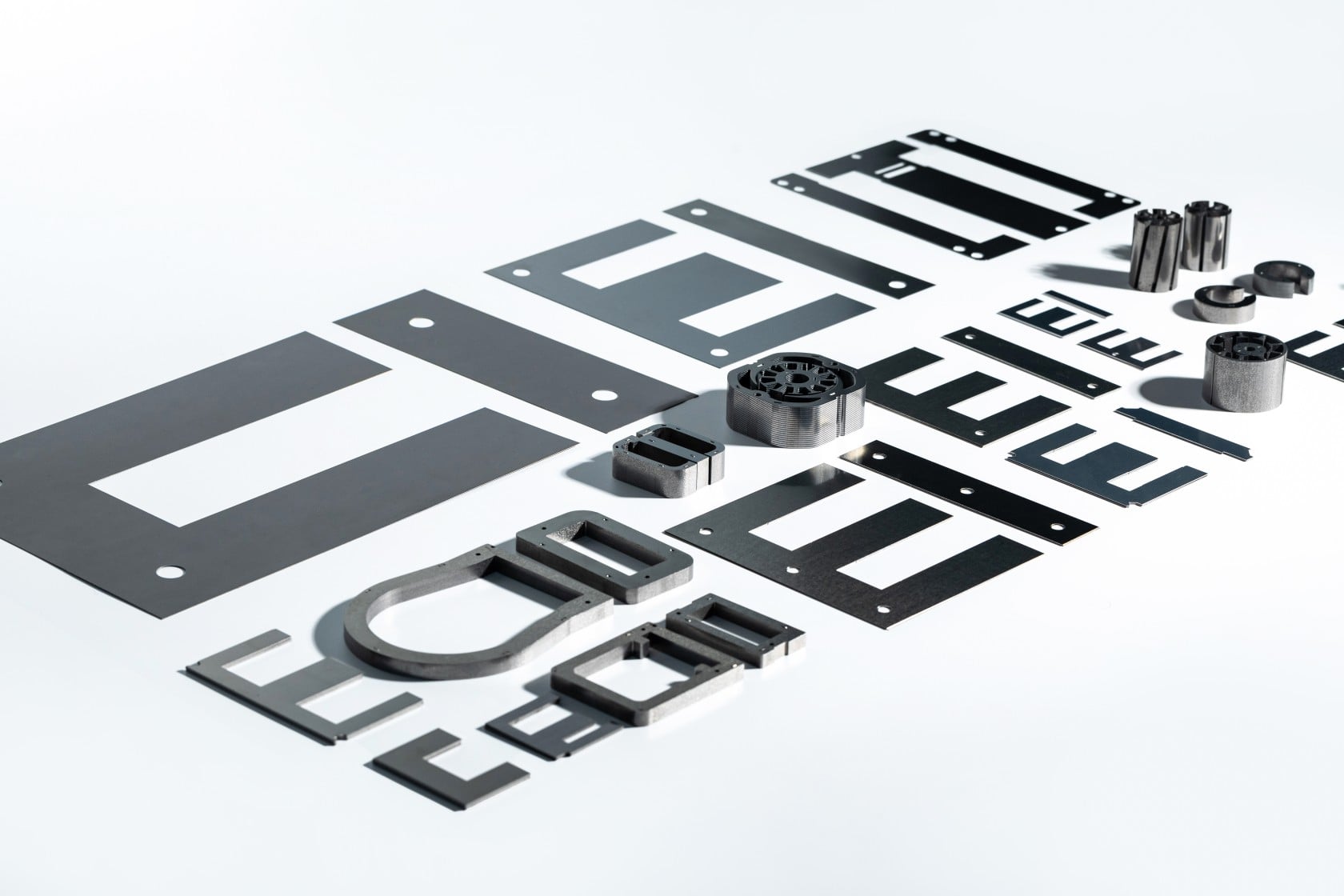
For engineers and sourcing teams working with transformers, inductors, reactors, and power electronics, EI lamination with air gap is an important core structure to understand. Unlike a standard EI core, a gapped EI core includes a controlled air gap in the magnetic path. This air gap helps manage magnetic saturation, stabilize inductance, and support specific electrical performance requirements.
In OEM projects, the size, position, consistency, and manufacturing quality of the air gap can directly affect core loss, noise, inductance stability, heat rise, and long-term reliability. That is why buyers should not only compare price, but also evaluate material grade, lamination thickness, stamping accuracy, burr control, annealing capability, and batch-to-batch consistency.
Tianxiang manufactures custom silicon steel laminations and cores based on drawings, including EI-Laminierung, EI Lamination with Air Gap, UI Lamination, Und Custom Made Silicon Steel Laminations for transformer, inductor, reactor, and industrial electrical applications.
What Is an EI Lamination with Air Gap?
An EI lamination with air gap is a laminated magnetic core made from E-shaped and I-shaped silicon steel sheets, with a designed gap in part of the magnetic circuit. The air gap may be created through the geometry of the lamination, a controlled spacing method, or a design specified by the customer’s drawing.
A standard EI lamination is often used where a closed magnetic path is needed. However, in some electrical designs, a completely closed magnetic circuit may not provide the required inductance behavior. By adding an air gap, the core can store more magnetic energy and reduce the risk of magnetic saturation under certain operating conditions.
This makes gapped EI cores useful in:
- Power inductors
- Reactors
- Chokes
- Current-limiting devices
- Special transformers
- Power supply components
- Industrial control equipment
- Electrical appliances
For custom projects, the air gap is usually defined by the engineer’s drawing or performance target. Buyers may specify inductance, current rating, core loss, noise requirement, temperature rise, material grade, lamination thickness, stacking height, and production quantity.
If your project requires a controlled air gap structure, Tianxiang can support drawing-based production of EI Lamination with Air Gap according to your technical requirements.
Why Does an EI Core Need an Air Gap?
The main purpose of an air gap is to control the magnetic behavior of the core. In magnetic components, saturation can occur when the core material can no longer handle increasing magnetic flux effectively. Once saturation happens, the component may lose inductance, generate excessive heat, create noise, or become unstable in operation.
An air gap helps by increasing the magnetic reluctance of the core. In practical terms, this allows the magnetic component to handle energy storage more predictably.
For engineers, the air gap can help with:
| Design Goal | How the Air Gap Helps |
|---|---|
| Inductance control | Helps achieve a target inductance value |
| Saturation resistance | Reduces the chance of early magnetic saturation |
| Energy storage | Supports inductor and reactor applications |
| Performance stability | Improves predictable operation under load |
| Custom circuit design | Allows the core to match specific electrical requirements |
However, the air gap must be controlled carefully. If the gap is too large, inductance may drop too much. If the gap is inconsistent, performance may vary from batch to batch. If the lamination edge has excessive burrs or poor alignment, the finished core may show higher noise, higher loss, or unstable assembly quality.
For buyers comparing different core structures, it is also useful to review standard EI-Laminierung Und UI Lamination options before confirming the final design.
Common Applications of Gapped EI Cores
1. Inductors
One of the most common uses of EI lamination with air gap is in inductor design. Inductors often require a controlled magnetic gap to store energy and maintain stable inductance under current load.
For this type of application, buyers usually care about:
- Stable inductance
- Air gap consistency
- Geringer Kernverlust
- Low noise
- Accurate stacking height
- Clean lamination edges
- Repeatable batch quality
For custom inductor projects, Tianxiang can support drawing-based production of EI Lamination with Air Gap according to customer specifications.
2. Reactors
Reactors are used in industrial power systems, motor drives, power conversion, and electrical control systems. A gapped EI core can help control current, reduce harmonics, and support stable electrical performance.
In reactor applications, the quality of the lamination and stacking process is very important. Poor dimensional control or inconsistent air gaps may lead to performance variation, noise, or temperature issues.
3. Special Transformers
Not all transformers use standard closed magnetic cores. Some transformer designs require a controlled gap to meet specific current, voltage, or performance requirements. In these cases, a custom gapped EI core may be specified by the engineering team.
For transformer buyers, it is useful to provide the supplier with a complete drawing, material requirement, lamination thickness, stack height, quantity, and target performance data before requesting a quote.
For standard transformer structures, buyers may also compare EI-Laminierung Und Three-Phase EI Lamination depending on the final application.
4. Power Electronics
Power electronics applications often require compact, efficient, and stable magnetic components. Gapped EI cores may be used in power supplies, converters, filters, and control devices where magnetic saturation and heat management must be controlled.
For these applications, buyers should pay close attention to material consistency, burr height, annealing requirements, and electromagnetic testing.
Key Parameters Buyers Should Check
When sourcing EI lamination with air gap, buyers should review more than just the outside dimensions. The following parameters can affect the performance and reliability of the final core.
| Parameter | What to Check | Why It Matters |
|---|---|---|
| Core Type | EI lamination with air gap | Defines the magnetic structure |
| Material | Silicon steel / electrical steel | Affects core loss and magnetic performance |
| Thickness | 0.23mm, 0.27mm, 0.30mm, 0.35mm, 0.50mm or custom | Influences loss, cost, and performance |
| Air Gap Size | Based on drawing or design target | Controls inductance and saturation behavior |
| Gap Consistency | Stable across production batches | Reduces performance variation |
| Stacking Height | As specified by the design | Affects final core performance |
| Burr Height | Low and controlled | Helps reduce assembly issues and core loss |
| Glühen | Optional based on performance need | Helps improve magnetic stability |
| Testing | Dimensional and electromagnetic checks | Confirms batch quality |
| Packing | Export-ready protection | Reduces shipping damage |
For RFQ preparation, buyers should send a PDF, DWG, or CAD drawing whenever possible. If the drawing is not available, the buyer should provide dimensions, material grade, thickness, stacking method, quantity, and target electrical performance.
How Air Gap Quality Affects Core Performance
A gapped EI core may look simple, but small manufacturing differences can create large performance differences. For example, inconsistent air gap size may cause variation in inductance. Poor edge quality may affect stacking and increase magnetic loss. Improper stacking may lead to vibration or noise.
The most important quality factors include:
Air Gap Accuracy
The air gap should match the drawing or technical requirement. Even a small deviation can change the magnetic behavior of the component.
In applications such as inductors, reactors, and power supply components, inaccurate air gap control may result in unstable inductance or inconsistent performance between production batches.
Gratkontrolle
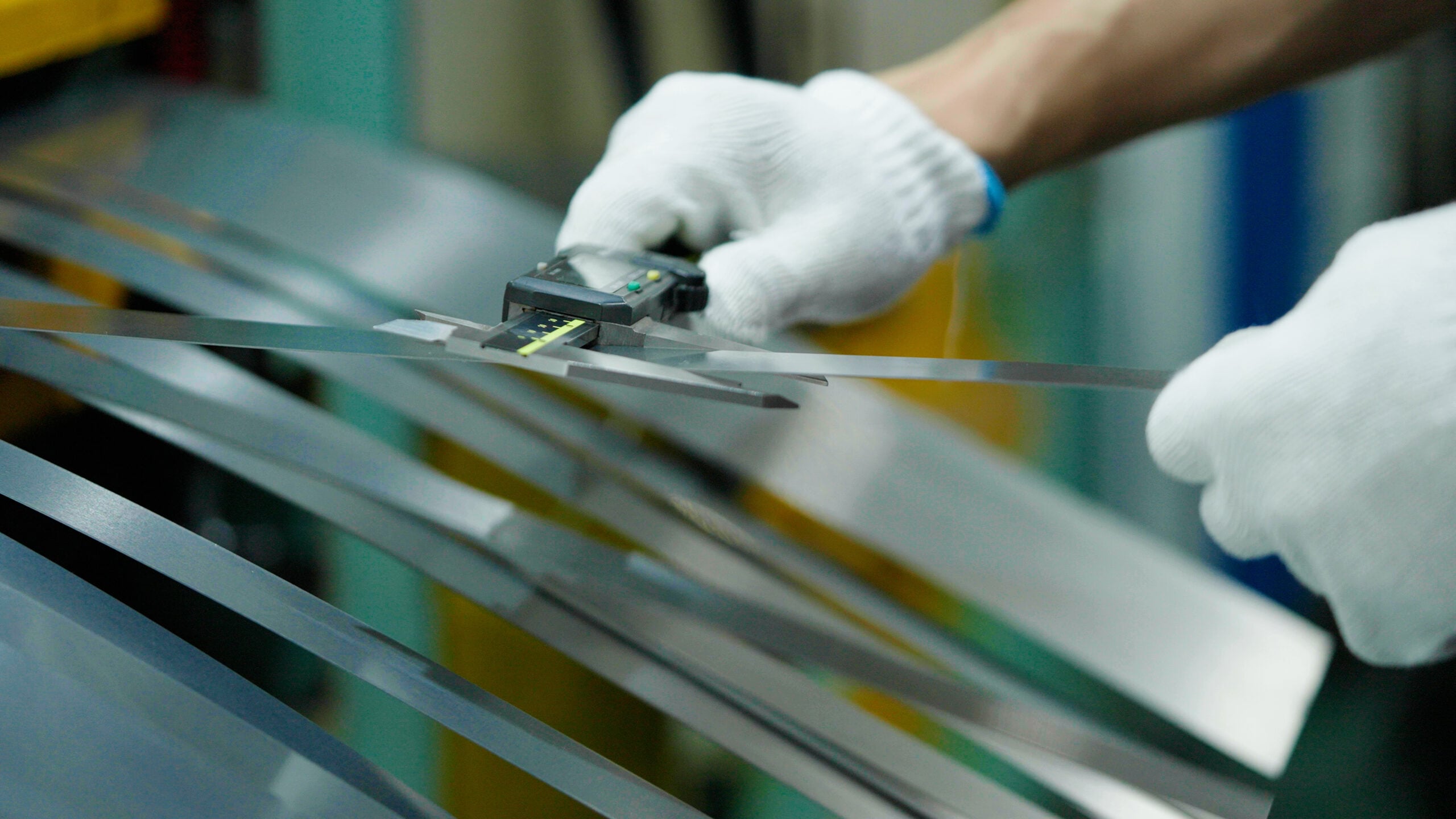
Burrs are small raised edges created during stamping or cutting. Excessive burr height can affect stacking quality, insulation, core loss, and noise. Precision tooling and proper inspection help keep burrs under control.
For buyers, burr control is not only a visual quality issue. It can affect assembly efficiency, magnetic performance, and long-term reliability.
Material Consistency
Silicon steel grade and thickness must remain consistent across production. Material variation may cause unstable performance, especially in sensitive transformer, inductor, and reactor applications.
When placing an order, buyers should clearly specify material grade, thickness, insulation coating requirements, and any equivalent standards accepted by the engineering team.
Stacking Alignment
Accurate alignment helps maintain the designed magnetic path. Poor stacking can create gaps, vibration, or dimensional issues during assembly.
For some projects, buyers may require special stacking methods, riveting, welding, or other assembly requirements. Tianxiang also provides Gestapelte Nieten solutions for selected core structures.
Annealing Requirements
Some applications require annealing to relieve stress and improve magnetic performance. For projects where lower core loss or better consistency is needed, buyers can consider Glühlaminierung as part of the specification.
Annealing is especially useful when the application is sensitive to core loss, heat rise, noise, or long-term performance stability.
Manufacturing Process for EI Lamination with Air Gap
A reliable manufacturing process is essential for stable gapped EI core quality. A typical process includes:
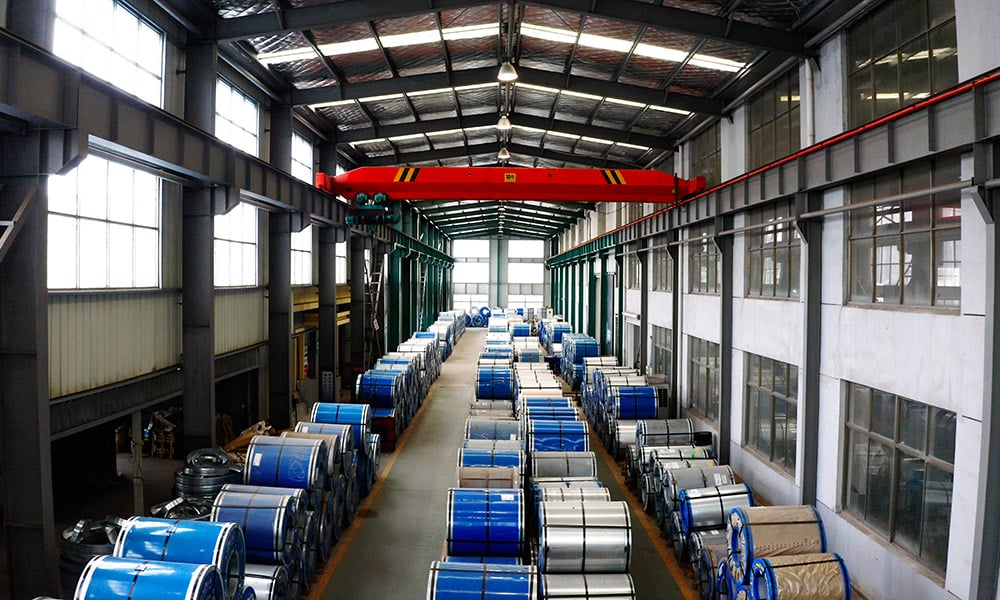
- Material inspection
The silicon steel material is checked for grade, thickness, and traceability. - Slitting or cutting
Material is prepared to the required width or sheet size. - Precision stamping
EI lamination shapes are produced according to tooling or customer drawings. - Burr and dimensional inspection
Key dimensions, edge quality, and hole or slot positions are checked. - Stacking or assembly preparation
Laminations are prepared according to stacking height and structure. - Annealing if required
Heat treatment may be used to improve magnetic performance. - Performance testing
Dimensional and electromagnetic testing can be applied based on project needs. - Export packing
Finished laminations are packed to protect against deformation, moisture, and shipping damage.
Tianxiang supports custom production for silicon steel laminations, including EI-Laminierung, EI Lamination with Air Gap, Three-Phase EI Lamination, and other laminated iron core products.
How to Specify a Custom Gapped EI Core
Before requesting a quote, sourcing teams should prepare as much technical information as possible. A complete RFQ helps reduce communication time and improves quotation accuracy.
Recommended RFQ information:
| RFQ Item | Example Information |
|---|---|
| Drawing | PDF, DWG, CAD, or sample photo |
| Product Type | EI lamination with air gap |
| Material Grade | Silicon steel grade or equivalent standard |
| Thickness | 0.30mm, 0.35mm, 0.50mm, or custom |
| Luftspalt | Size, position, and tolerance |
| Stack Height | Required finished stack dimension |
| Quantity | Sample, trial order, or annual forecast |
| Stacking Method | Loose stacking, riveting, welding, or custom |
| Glühen | Required or not required |
| Performance Target | Core loss, inductance, noise, heat rise |
| Packing | Export carton, pallet, anti-rust protection |
For OEM projects, drawing-based production is strongly recommended. If the buyer only has an existing sample, Tianxiang can review the sample details and discuss possible production requirements.
For non-standard structures, buyers can also review Custom Made Silicon Steel Laminations to understand possible customization directions.
Choosing the Right Supplier for EI Lamination with Air Gap
When selecting a supplier, buyers should look for more than a basic stamping service. A good gapped EI core supplier should understand how lamination quality affects magnetic performance, assembly stability, and long-term product reliability.
Important supplier capabilities include:
- Experience with silicon steel laminations
- Custom tooling and drawing-based production
- Stable stamping accuracy
- Burr control process
- Material traceability
- Annealing capability
- Electromagnetic performance testing
- Export-ready packaging
- Fast engineering response
- Consistent mass production ability
For B2B buyers, the goal is not simply to buy a low-cost lamination. The real goal is to reduce risk in production, maintain stable electrical performance, and keep assembly quality consistent from sample approval to mass production.
A reliable supplier should be able to support technical communication before production, sample confirmation, batch production, quality inspection, and export packaging. This is especially important for OEM buyers in transformer, inductor, reactor, motor, appliance, and industrial control industries.
Related Products
For transformer, inductor, reactor, and motor applications, buyers may also need related silicon steel core products:
- EI-Laminierung
- EI Lamination with Air Gap
- UI Lamination
- Three-Phase EI Lamination
- Glühlaminierung
- Custom Made Silicon Steel Laminations
If your project requires custom dimensions, special gap control, annealing, low-burr stamping, or specific magnetic performance, send your drawing and technical requirements for review.
FAQ
1. What is EI lamination with air gap?
EI lamination with air gap is a silicon steel EI core structure with a controlled gap in the magnetic path. The air gap helps control inductance, reduce saturation risk, and support energy storage in inductors, reactors, and special transformer designs.
2. Why does an EI core need an air gap?
An EI core may need an air gap when the electrical design requires controlled inductance, improved saturation behavior, or more stable magnetic performance under load. The air gap is especially important in inductor and reactor applications.
3. What applications use gapped EI cores?
Gapped EI cores are commonly used in inductors, reactors, chokes, power supplies, industrial control devices, and special transformers. The final application depends on the electrical design and performance target.
4. Can the air gap size be customized?
Yes. The air gap size, position, and tolerance can be customized according to the customer’s drawing or technical specification. For accurate quotation, buyers should provide a PDF, DWG, CAD drawing, or detailed sample information.
5. Does the air gap affect core loss?
Yes. The air gap changes the magnetic behavior of the core. If the gap is not properly designed or manufactured, it may affect inductance, core loss, noise, and heat rise. That is why consistent gap control and lamination quality are important.
6. What material is used for EI lamination with air gap?
Most EI laminations with air gap are made from silicon steel or electrical steel. The material grade and thickness should be selected according to the required magnetic performance, cost target, and application.
7. Is annealing required for gapped EI cores?
Annealing is not always required, but it may be recommended when the project needs better magnetic stability, lower core loss, or improved consistency. Buyers can specify annealing requirements during the RFQ stage.
8. What information should I provide for a quotation?
For a quotation, provide the drawing, material grade, thickness, air gap size, stack height, quantity, stacking method, annealing requirement, and target performance such as core loss, inductance, noise, or heat rise.
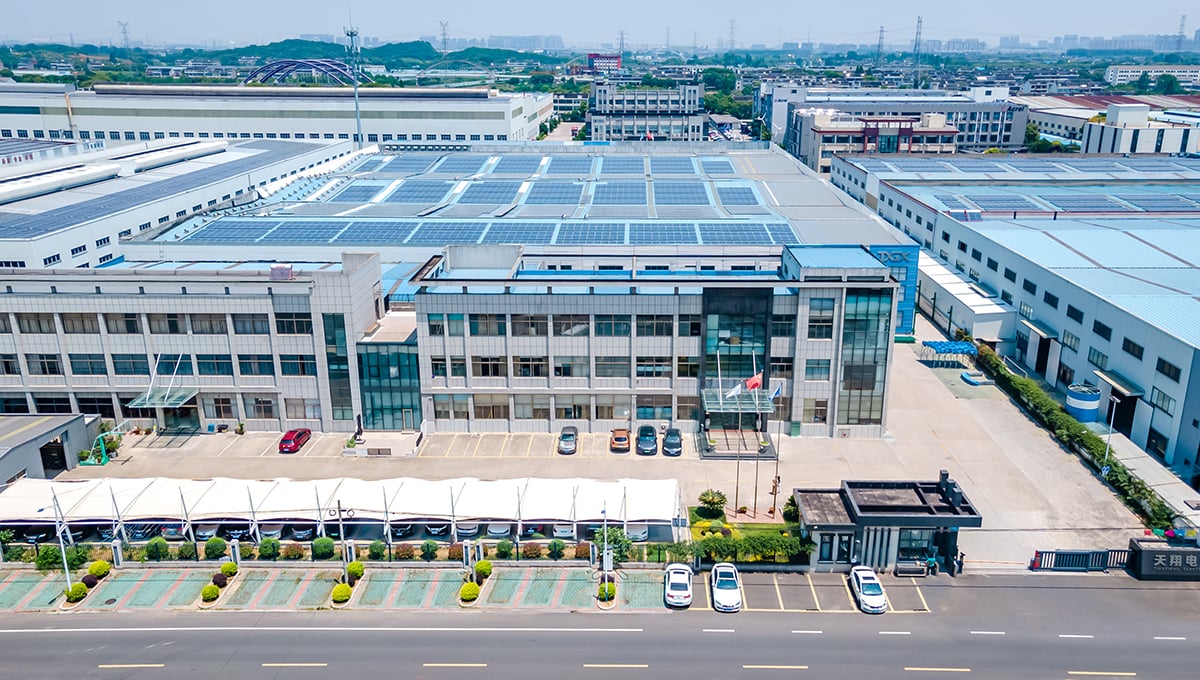
EI lamination with air gap plays an important role in transformer, inductor, reactor, and power electronics applications where controlled magnetic performance is required. For buyers, the key is not only the EI core shape, but also the accuracy and consistency of the air gap, material quality, lamination thickness, burr control, stacking alignment, and testing process.
Tianxiang provides custom silicon steel laminations and iron cores for global OEM customers. Whether you need standard EI-Laminierung, gapped EI Lamination with Air Gap, Glühlaminierung, or drawing-based Custom Made Silicon Steel Laminations, our engineering and production team can support your project from sample development to mass production.
Need a custom EI lamination with air gap? Send us your drawing, material grade, thickness, quantity, stacking method, and target performance. Our team will review your requirements and provide a quotation.